
Coexistence is the
Way Forward
Moving beyond reactionary conflict: Understanding the structural drivers of human-elephant encounters and implementing scientifically proven, community-managed solutions that respect ancient migration pathways while securing rural livelihoods.
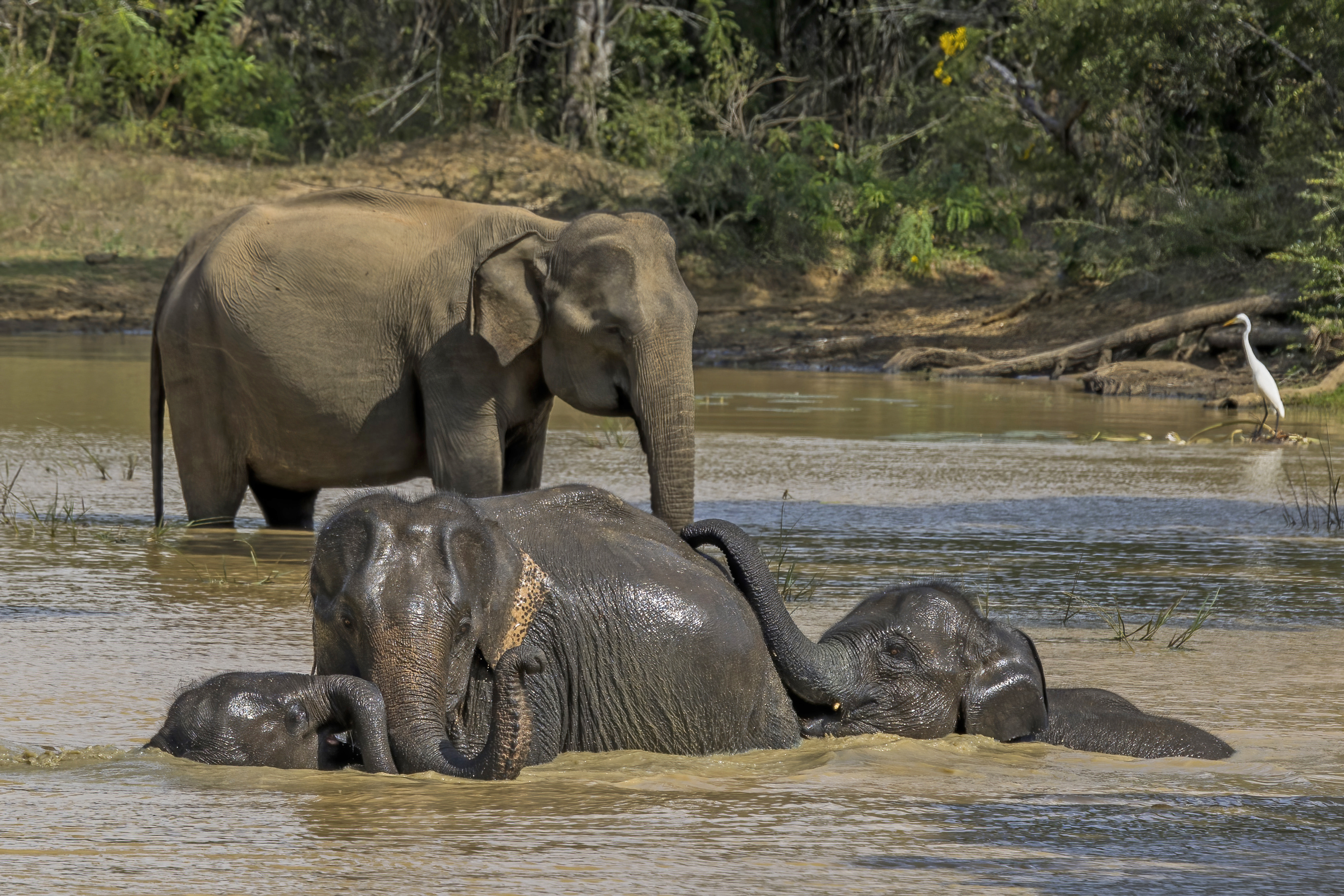
Galgamuwa Sub-district Buffer. Lone bull crossing fallow seasonal strip without boundary degradation.
Deconstructing the Landscape Conflict
Contrary to common belief, Sri Lankan elephants cannot simply be confined within Department of Wildlife Conservation (DWC) protected areas. Science demonstrates that parks cover only 30% of their actual biological home ranges.
Over 70% of wild elephant range overlaps directly with human agricultural lands.
Elephants need massive, contiguous landscapes to secure water and forage across dry and wet seasons. When linear infrastructure, settlements, and continuous monoculture slice through home ranges, interactions become inevitable. Solutions must occur on shared private and communal grounds—not purely behind national park boundaries.
Source: Centre for Conservation and Research (CCR) GPS Satellite Tracking Telemetry Matrix.
Agricultural Encroachment
Unplanned conversion of scrublands and traditional dry-zone swidden (chena) tracts into permanent fenced properties blocks multi-generational paths connecting dry-season reservoirs (tanks).
High-Calorie Cash Crops
Cultivated crops—paddy rice, sweet bananas, sugarcane, and hybrid maize—contain up to five times the nutritional density of wild grass. Elephants achieve maximum caloric replenishment in minimal grazing time.
Uncoordinated Linear Fencing
Misplaced permanent electric fences erected along arbitrary administrative boundaries isolate herds on small pockets of scrubland, forcing them through village settlement clusters to reach essential water points.
Community-Managed Seasonal Electric Fences
Pioneered by the Centre for Conservation and Research (CCR) in partnership with rural agrarian societies, seasonal fencing represents a paradigm shift from rigid territorial exclusion to dynamic, time-bound harvest protection.
Permanent Forest Boundary Fences
Erected on jungle perimeters kilometers away from villages. Villagers have no sense of ownership, so solar energizers and wire strands fall into disrepair. Inside the forest, during the dry season, grass dries up and elephants are starving—giving them extreme motivation to break through fence lines with logs or tusks.

Temporary Seasonal Paddy Enclosures
Fences are deployed only around the collective village paddy tract during the 3-4 months of crop maturation. When the rice is harvested, the community packs away the wire and solar energizers. Elephants are then free to graze on the remaining nutrient-rich stubble during fallow months without food motivation to damage equipment.

Four-Stage Community Lifecycle Architecture
Agrarian Pre-Sow Assembly
Village farmers convene at the local tank temple to form a patrol roster and verify high-tensile wire reels and solar battery arrays.
Cultivation Grid Activation
Posts are driven around the perimeter of the joint cultivation zone. 6,000–8,000V non-lethal pulsed energizers run from 18:00 to 06:00 daily.
Bimodal Daily Circuit Check
Assigned community teams test ground voltage morning and dusk, clearing encroaching grass weeds that could ground the electrical charge.
Harvest Deconstruction
Within 72 hours of paddy harvesting, wires and components are stored securely. Elephants enter freely to feed on stubble safely.
Next-Gen Non-Lethal Early Warning Grids
Pairing low-cost botanical deterrents with cutting-edge optical and acoustic sensors to eliminate blind encounters and locomotive casualties along high-risk corridors.
AI Thermal Railway Sentinel
Dual optical-thermal camera towers mounted on curved track stretches detect elephant heat signatures up to 1.5km out. Automatically transmits real-time telemetry to the locomotive engine cabin to brake ahead of blind curves.
Infrasonic Array Network
Elephants communicate using rumbles below 20Hz that travel several kilometers through seismic and acoustic waves. Sub-audible ground and microphone nodes pinpoint moving herds 45 minutes before they reach farm gates.
Honeybee & Citrus Hedges
Elephants avoid the painful stings of bees around sensitive ears and trunks, retreating immediately upon hearing hive frequencies. Interplanting with spiny lime (Citrus aurantiifolia) creates impenetrable, lucrative cash crop borders.
GSM Flare & Siren Tree
When trip-wire laser sensors on scrub margins are crossed, solar-powered warning towers trigger low-intensity stroboscopic pulses while broadcasting automated voice SMS alerts to village households in Sinhala and Tamil.
Field Evidence from the Buffer Zones
Data-driven pilots conducted alongside agrarian committees in the dry-zone show dramatic drops in human and elephant fatalities when science replaces hostility.

Galgamuwa Coexistence Pilot
Deployed over 42 kilometers of seasonal community-managed fences protecting 14 adjoining hamlets during the Yala and Maha cropping seasons.

Batticaloa Railway Corridor
Installed 18 solar-powered thermal sensor towers coupled with automated VHF alerts along a notorious 12km jungle railway corridor where nocturnal locomotive collisions were historically common.

Hambantota Buffer Agronomy
Transitioned 320 smallholder farming families away from high-attraction sweet corn and bananas along corridor borders to unpalatable high-value crops like Scotch Bonnet peppers, ginger, and lime.
Farmer & Villager Non-Lethal Safety Field Code
Proven behavioral guidelines developed by field biologists and village elders to safeguard human lives during unexpected close-quarter night encounters.
Focused Ground Beams, Not Faces
Never shine ultra-bright LED spotlights directly into an elephant's eyes. Blinding an adult elephant causes acute panic, disorients them, and frequently triggers defensive frontal charges. Cast high-lumen light downward onto the ground in front of the animal to signal human presence without blinding.
Replace Explosives with Controlled Acoustics
Cease using unmanaged firecrackers (Ali Vediya) inside village lanes. Indiscriminate loud explosions wound animals, deafen them, and condition bulls into aggressive combat response. Use unified metallic acoustic clanging from safe watchtowers or vehicular engine revving from designated shelters.
Elevated Watchtowers (Pela)
Never sleep on ground-level verandas during the harvest season. Agrarian watch-houses (Pela) must be built at least 5 meters off the ground on thick, sturdy mature trees or reinforced concrete pillared platforms with high clearance and quick escape ladder cords.
Downwind Retreat & Lateral Movement
Elephants have poor eyesight but an extraordinary sense of smell. If surprised at close quarters on foot, never run in a straight line down open roads. Retreat downwind, move at a sharp diagonal angle, and drop a backpack or cloth to catch their olfactory investigation and buy escape time.
Aroma-Sealed Grain Granaries
Domestic house break-ins occur because elephants smell bagged unhusked rice or jaggery through clay brick walls. Grain stores (Bissa) should be constructed freestanding 30 meters away from family sleeping quarters with airtight lime sealing to prevent vapor trails.
Emergency Wildlife Contacts
In case of injured elephants, downed powerlines touching fences, or trapped herds in deep agricultural wells:
Community Landscape Coexistence Selector
Select your local landscape topology to evaluate the scientifically recommended non-lethal intervention matrix endorsed by conservation biologists.
Temporary Community-Managed Paddy Fence
Deploy temporary high-tensile 2-strand electric fencing only during the 100 days of crop ripening. Form a 4-man nightly villager patrol. Immediately dismantle upon harvest to prevent fence breakage and maintain dry-season corridor connectivity.